
作者:公陵伯
来源:原创
时间:2026-08-26
阅读:938 次
少年四大名捕
FTC proposes new rule to ban junk fees, potentially saving consumers 'tens of billions'_我的网站

A |
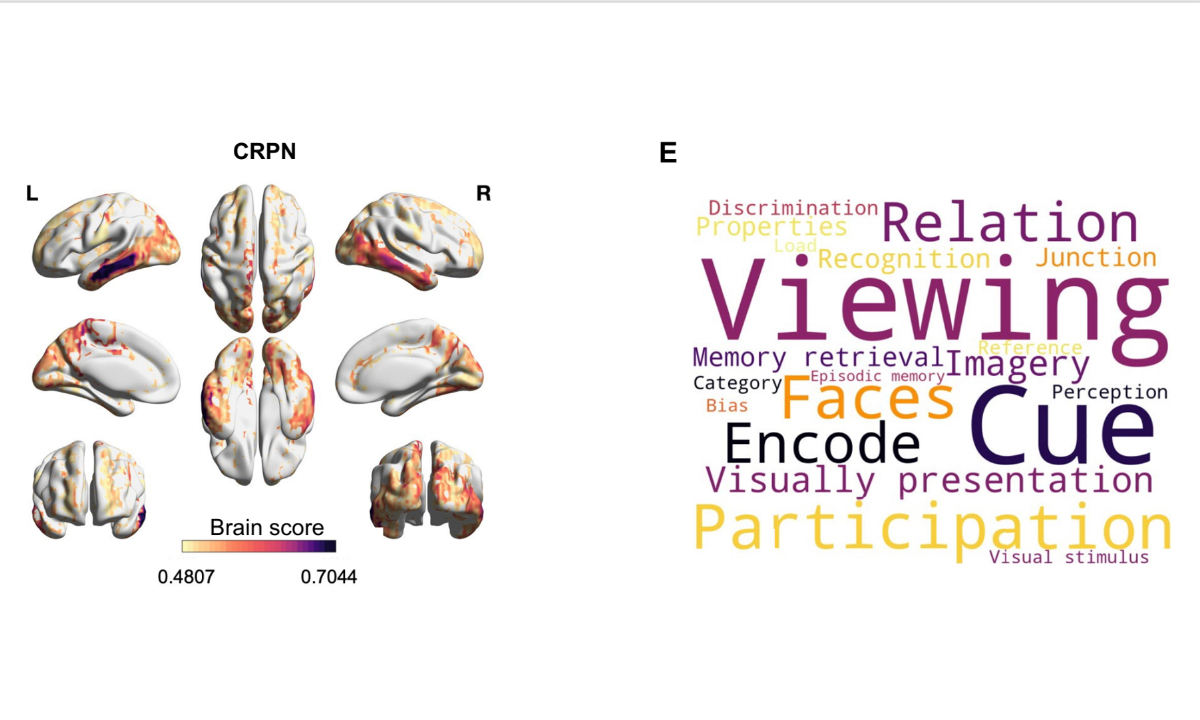
Chinese scientists have developed a “brain-reading” AI model that could help predict the risk of depression among adolescents up to four years in advance by analyzing how humans respond to facial expressions, a technology expected to inspire future development of embodied intelligent humanoids capable of perceiving human emotion and thoughts through nuanced facial cues.
WHO data show that around 332 million people worldwide have depression, about one-third of whom have treatment-resistant forms of the condition. In China, an estimated 95 million people suffer from depression, National Business Daily reported, citing statistics from the China Mental Health Survey.
Using data from a population-based longitudinal adolescent cohort recruited across several European countries, the research team led by Lu Han, assistant professor at the School of Artificial Intelligence, Shenzhen University, has built an AI model that predicted which 19-year-olds were more likely to develop depression at the age of 23. The predictions were backed up by an independent clinical cohort of individuals with depression. The team’s paper was published in the journal Science Advances this month.
According to Lu, the study used brain scans taken at age 19 to predict depression-related symptoms at age 23. The study focuses on adolescence because the transition from adolescence to early adulthood is a key developmental period when depressive symptoms can increase rapidly. The earlier risks are identified, the greater the opportunity for prevention, Lu told the Global Times on Monday, adding that the findings need to be further validated in middle-aged and older adults and across different ethnic groups in future research.
In this study, the researchers analyzed data from adolescents in the IMAGEN, a population-based longitudinal cohort recruited across several European countries. At age 19, participants underwent an fMRI emotional-face task, and their emotional symptoms were assessed using standardized questionnaires. Genetic data obtained from blood samples were also analyzed, and participants were followed up at age 23. The researchers examined whether neural representations of angry faces at age 19 were associated with emotional symptoms and could predict elevated emotional symptoms four years later.
According to Lu, people without depression can more easily distinguish emotional changes based on others’ facial expressions and respond accordingly – for example, responding with friendliness to a smiling expression. But people with depression cannot do this, and are more likely to assume people are angry with them.
A brain-aligned deep-learning model developed by Lu’s team suggested that those participants whose brains were less able to distinguish between different facial emotions and tended to perceive others as angry were more likely to develop symptoms of depression and anxiety in adulthood.
The hypothesis that adolescents at risk of depression may respond differently to other people’s facial expressions than those without such risk based on the negative information processing bias long observed in depression research: people at risk of depression are more likely to notice, interpret, or remember negative social information, Lu said.
The researchers focused on angry facial expressions because they signal social threat and rejection, which are closely linked to interpersonal difficulties and negativity bias associated with depression. They hope to further understand how this bias develops within the visual system.
Building on this, they created a deep learning model, which mimics how the brain processes visual information, to predict how the brain encodes abstract emotional concepts such as anger.
They found that 19-year-olds whose response to facial expressions was skewed in favour of negative emotions or memories were the most likely to develop some form of depression.
Based on these findings, Lu’s team then developed a marker that can identify possible warning signs.
According to Lu, the study found that the computational biomarker was linked to the depression-related variant rs11123030 and polygenic risk for depression, suggesting that genetic susceptibility may affect emotional perception. It also provided predictive information beyond family stress and socioeconomic factors, complementing rather than replacing environmental risk factors. Therefore, depression is neither purely genetic nor purely psychological, but a complex mental disorder arising from the interplay of genetic susceptibility, brain development, emotional and cognitive processes, and life experiences.
According to Lu, the study is also expected to advance AI by aligning deep neural networks with human brain activity and using parameter perturbations to probe neural mechanisms, allowing models to both predict and explain how biases may arise.
The findings suggest that future affective computing and embodied AI should go beyond simply labeling facial expressions, incorporating visual details while preventing prior assumptions from overriding real-time sensory input, Lu said, adding that the findings could provide valuable insights for developing more interpretable robotic perception systems that more closely emulate the way humans process emotions.
。 The Federal Trade Commission is proposing a new rule that seeks to eliminate junk fees -- those hidden costs that can unexpectedly push up prices consumers pay at checkout.The proposed rule would apply to many industries across the economy, including event tickets, hotels and apartment rentals. If the rule goes into effect, companies that continue to charge these fees could be fined and forced to pay back consumers.The FTC says the far-reaching rule could save consumers “tens of billions of dollars in fees.”“The proposed rule would prohibit corporations from running up the bills with hidden and bogus fees, requiring honest pricing and spurring firms to compete on honesty rather than deception,” FTC Chair Lina Khan said on a call with reporters.The FTC estimates the proposed rule will save consumers more than 50 million hours per year of wasted time spent searching for the total price in live ticketing and short-term lodging alone. This time savings is equivalent to more than $10 billion over the next decade.There will be a 60-day public comment period once the rule is published in the Federal Register.Senior administration officials, however, did not have guidance on when the rule could be finalized and go into effect.The FTC has the authority to move forward with this rule without additional approval from Congress, officials said.As President Biden continues his push of “Bidenomics” and focuses on the everyday costs that hit American pocketbooks, this is another chance for the president to try to appeal to voters about his economic message. He’s repeatedly highlighted his administration's efforts to tackle these junk fees across a number of sectors -- from air travel to health care.Separately, the Consumer Financial Protection Bureau is issuing guidance to large banks and credit unions, prohibiting them from charging customers fees for basic information about their accounts, like checking their bank account balance.The CFPB also released a new report showing its crackdown on bounced check fees has saved consumers nearly $2 billion since 2021.。
Current article:http://t8oxut.tichannangenzhuchuapin.cfd/news/20260826_4295194.html
Published on:21:03:43


